 Melmac
AI for automotive, from part number to published page.
Match supplier catalogs, keep fitment and attributes in one record, and produce the imagery and creative each channel needs — with a confidence on every match and a person on the edge cases.
Illustrative.
Every catalog has its own part number.
Fitment lives in a spreadsheet.
Content ships before the image does.
Match. Record. Render. Publish.
- Match the catalog.OEM, aftermarket and distributor numbers, with ACES/PIES mapping and a confidence level on every pair.
- Keep one part record.Attributes, fitment, assets and channel mappings in one canonical record.
- Images that match the spec.One approved shot becomes the crops, backgrounds and angles each channel needs.
- Creative at every size.Brand tokens in, rendered ads out, published as part of the run.
- Check before publish.A rubric for fitment, claims and format, with a verdict on every run.
- Forecast the part.Demand forecasts that show the evidence behind each number and let you rewind.
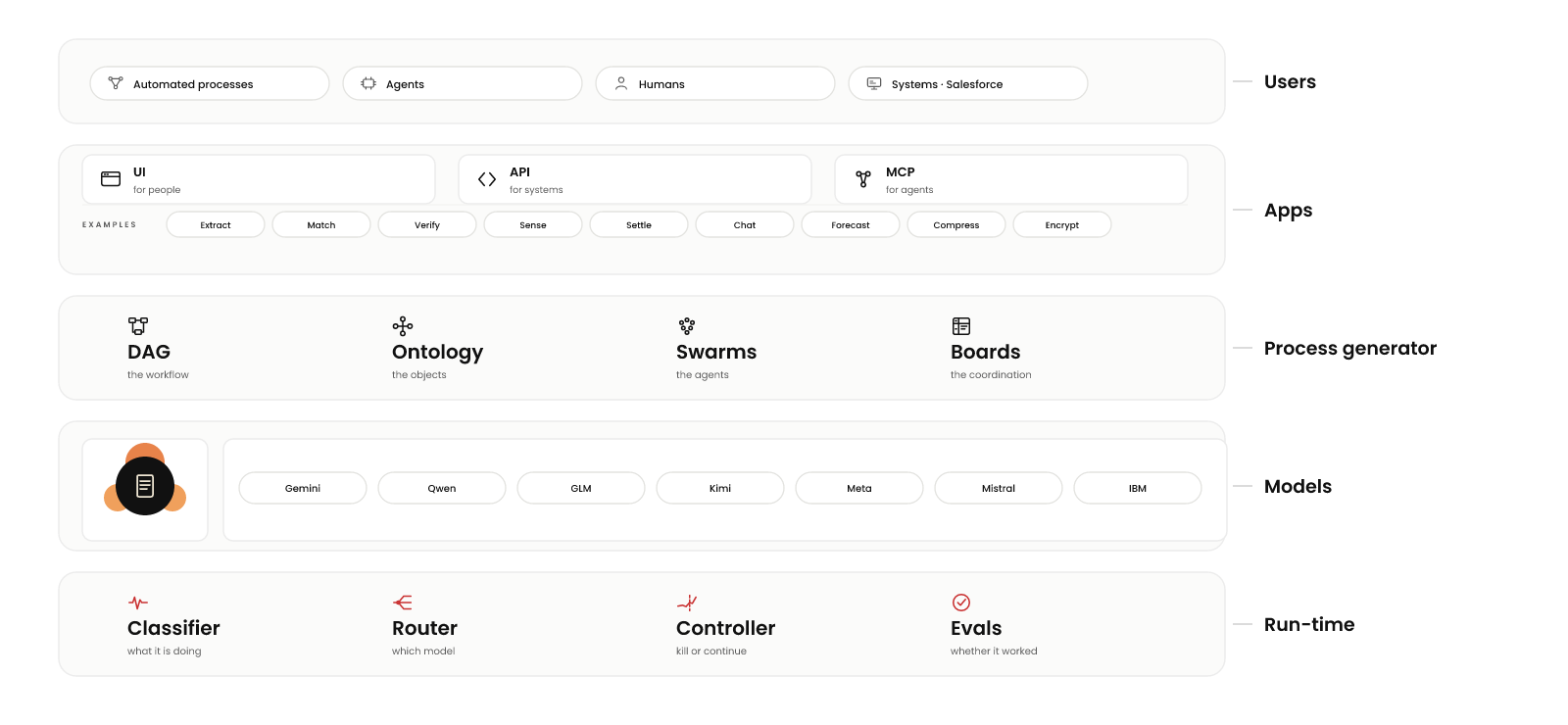
Crosswalk, PIM, Studio and Ads are the same stack, pointed at different parts of the catalog.
Where a run starts.
Start with the catalog, the fitment table or the brand that consumes the most manual hours.
ACES/PIES catalog matching
Match a supplier catalog to the aftermarket standard, with attributes, text and images voting on every pair.
See Crosswalk →OEM to aftermarket cross-reference
Line up OEM numbers with aftermarket equivalents, and send the uncertain pairs to a person instead of the feed.
See Crosswalk →Fitment and attribute normalisation
One part record with year, make, model, engine and the attributes each channel requires.
See PIM →Product imagery variants
Capture once, review against the spec, and generate the crops and angles each marketplace asks for.
See Studio →Dealer and brand creative
Give Ads a product feed and a brand file. Get finished creative at every size, published in the same run.
See Ads →Listing QA before publish
Check fitment claims, formats and required fields against a rubric before the listing goes live.
See Evaluation →Built for the teams that own the catalog.
The catalog is the product. The imagery and the ads are how it gets found.
A match you can explain.
Every pair carries the attributes, text and images that voted for it, the confidence it earned, and the person who reviewed it when the score was low.
Attributes, text and images vote. Low-confidence pairs go to a person.
Attributes, fitment and assets live in one place, not five channel copies.
Creative is laid out at the channel's exact dimensions, not recropped later.
Agreed up front. You pay when the task is done.
| The question | The old way | A Melmac run |
|---|---|---|
| A catalog match | VLOOKUP and a spot check. | Attributes, images and text vote; every pair is scored. |
| A product record | One copy per channel. | One record, mapped per channel. |
| A campaign | One hero image, recropped. | Variants rendered at each size. |
| A bad listing | Found after it goes live. | Checked against a rubric before publish. |
| The invoice | Retainer plus ad hoc. | One quote, paid on completion. |
A catalog, a record, a rendered asset.
Illustrative dry runs, not client results. The numbers belong to the example; the record is the point.
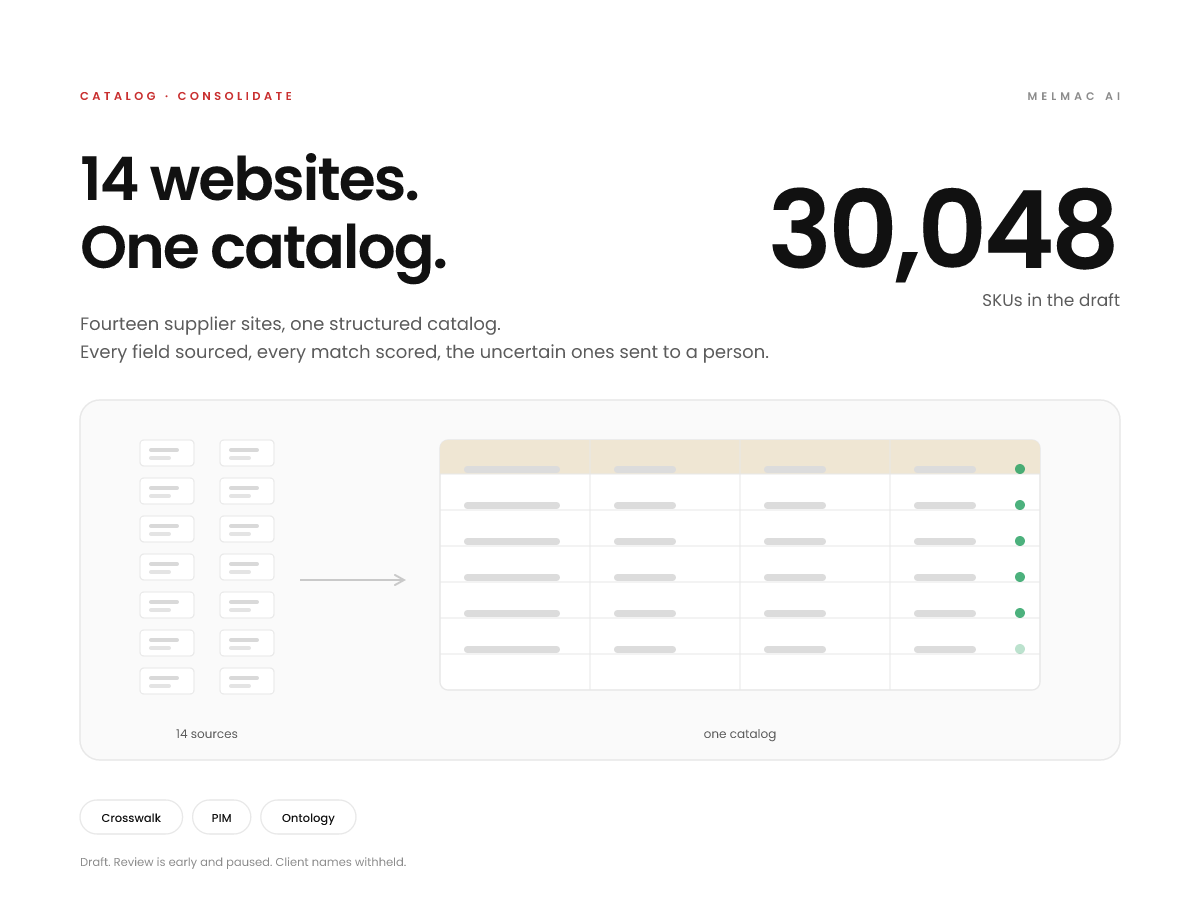
One catalog from many sources
Fourteen supplier sources into one draft; every match scored, the uncertain ones sent to a person. Draft, client names withheld.
See Crosswalk →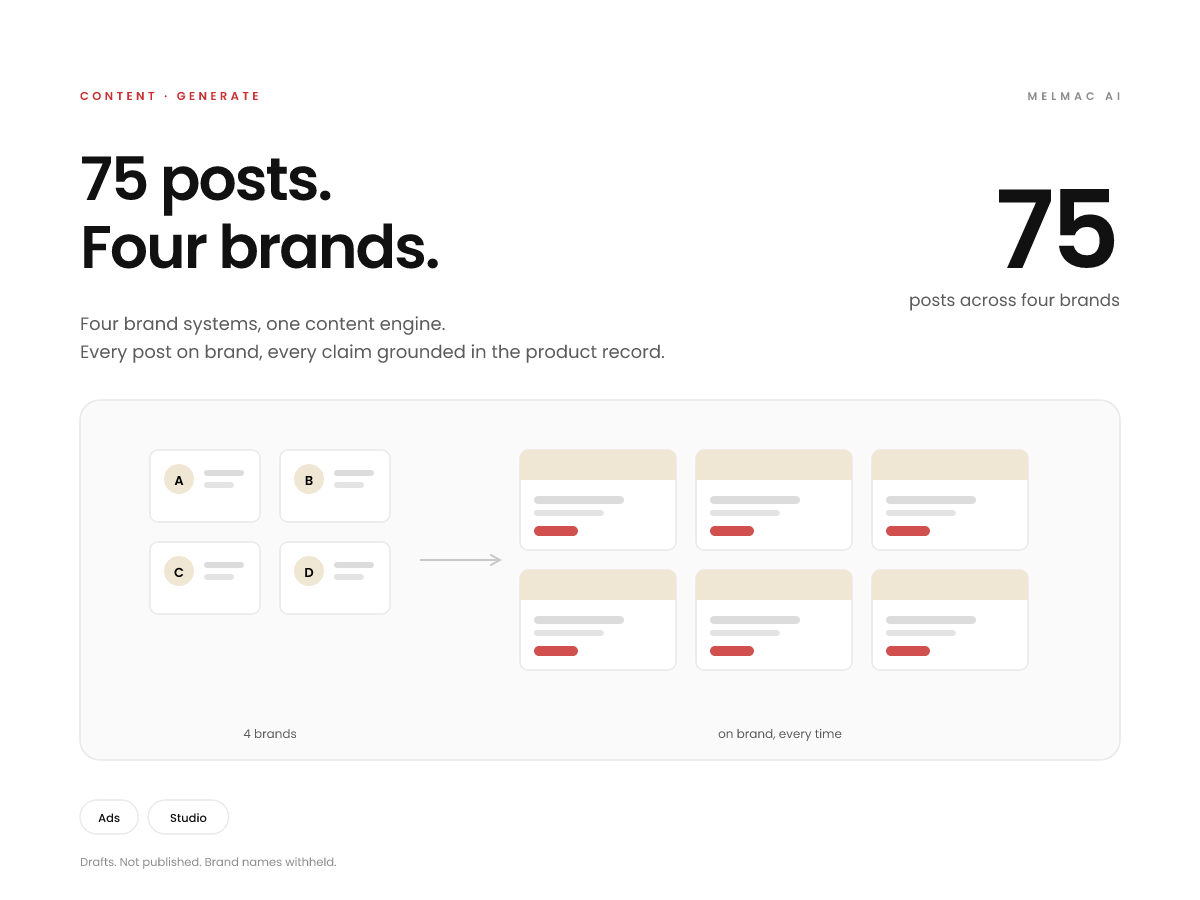
Many brands, one catalog
Four brand systems, one content engine, every claim grounded in the product record. Drafts, not published. Brand names withheld.
See Ads →Ask for the same dry run on one catalog pair or one brand.
What automotive teams ask.
What are ACES and PIES, and can Melmac map to them?
ACES and PIES are the aftermarket standards for vehicle applications and product information. We scope the mapping as part of the run: attributes are normalised, fitment is treated as evidence, and every pair carries a confidence level.
Can Melmac match OEM and aftermarket part numbers?
Yes. Crosswalk normalises descriptions, units and attributes on both sides, then matches on attributes, text and images. Every pair carries a confidence level, and the uncertain ones go to a person instead of straight into the feed.
How do you handle vehicle fitment?
Fitment is a set of attributes, not a guess. We normalise year, make, model, engine and other attributes, then let the evidence vote. Low-confidence fitment goes to a review queue.
Do you generate product images?
Yes. Studio starts from an approved shot, reviews it against the product attributes, and generates the crops, backgrounds and angles each channel needs.
Can you produce dealer or brand ads?
Ads takes a product feed and a brand file, renders each asset at the exact size the channel needs, and publishes it. Many brands can share one catalog without redrawing anything.
Does Melmac replace our PIM?
It can be the product record, or it can feed the PIM you already run. One canonical record with attributes, assets and channel mappings is the point either way.
Can this work across multiple brands and markets?
Yes. One catalog can produce work for several brands, and channel mappings are derived per market rather than re-typed.
How do we start an automotive engagement?
Pick one catalog pair, one product family or one brand. We run a dry run so you can see the matching rules or the schema before anything is processed, then agree a single price. You pay when the task is done.
Bring one catalog. See the match.
One price, agreed before anything runs. You pay when the task is done.